
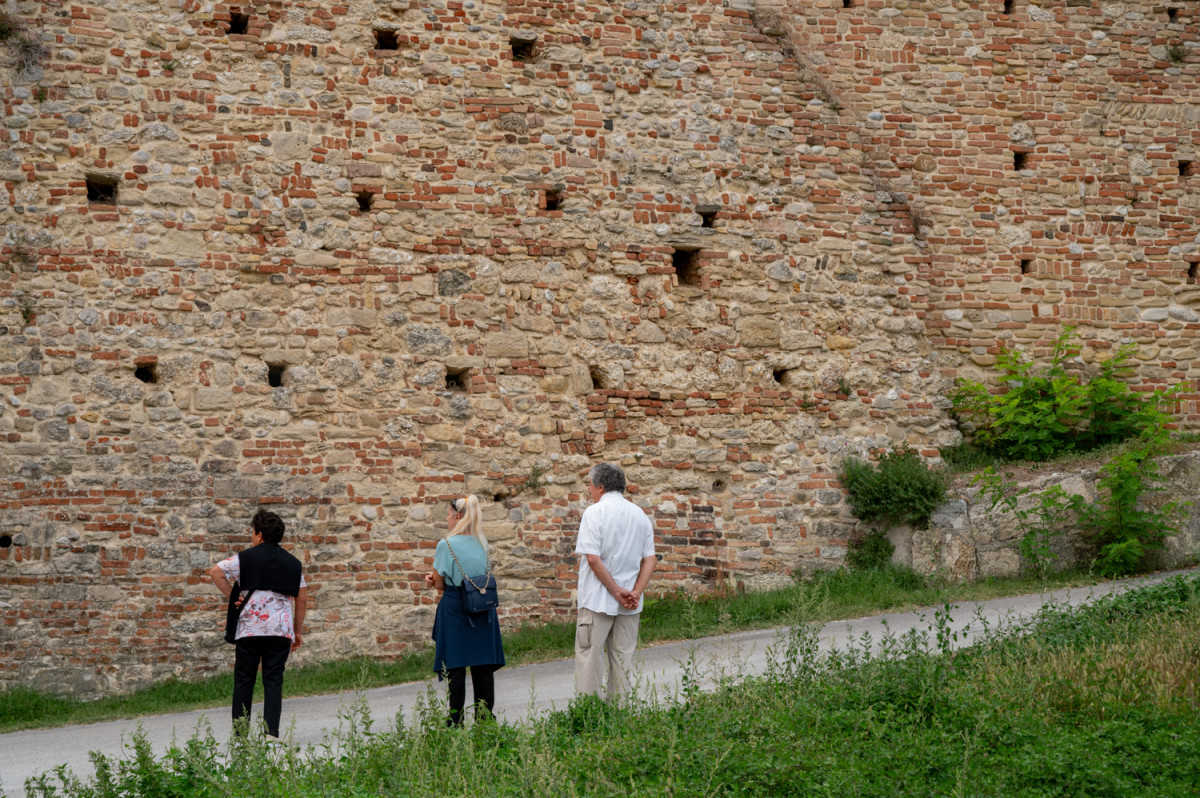
Walking through Ripatransone means traversing a layered and fascinating urban landscape, where every corner tells a story rooted in the Middle Ages. Built on a ridge that embraces five hills, the city preserves one of the most extensive and complex historic centers in the Marche, marked by towers, city walls, gateways, and defensive structures.
Since the 9th century, Ripatransone has developed around four original castles: Monte Antico, Capo di Monte, Agello, and Roflano. Each was an autonomous entity, with its own walls, gate, church, and identity. Over the centuries, these nuclei have merged into a single urban center, but traces of their autonomy are still visible: in the place names, in the architectural remains, in the city's lines.
This circular itinerary, suitable for everyone and walkable in two hours at a leisurely pace, is an invitation to rediscover medieval Ripatransone, among ancient neighborhoods, evocative passageways, arches, walled glimpses, and community spaces. An open-air narrative where the urban landscape becomes a story.
Itinerary stops
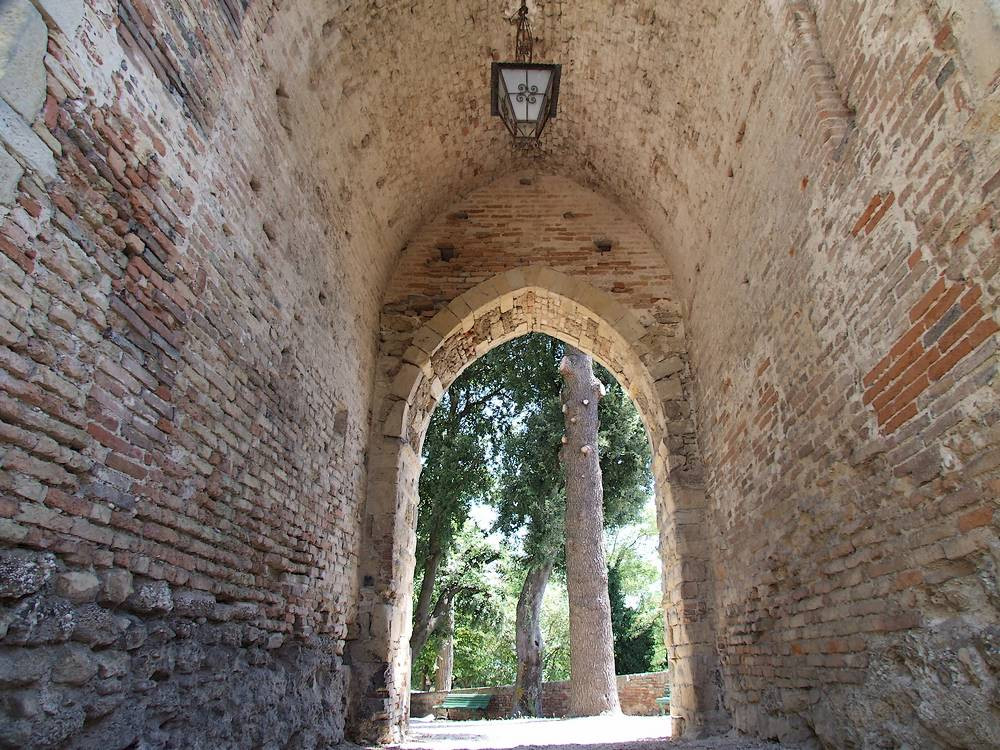
Monte Antico Gate
We begin at what was likely the first fortified settlement: Monte Antico, which dominates the city's highest ridge. Access is through Porta di Monte Antico, now flanked by a massive 15th-century crenellated tower. The gate leads to the neighborhood of the same name, one of the highest and most strategic in the medieval city.
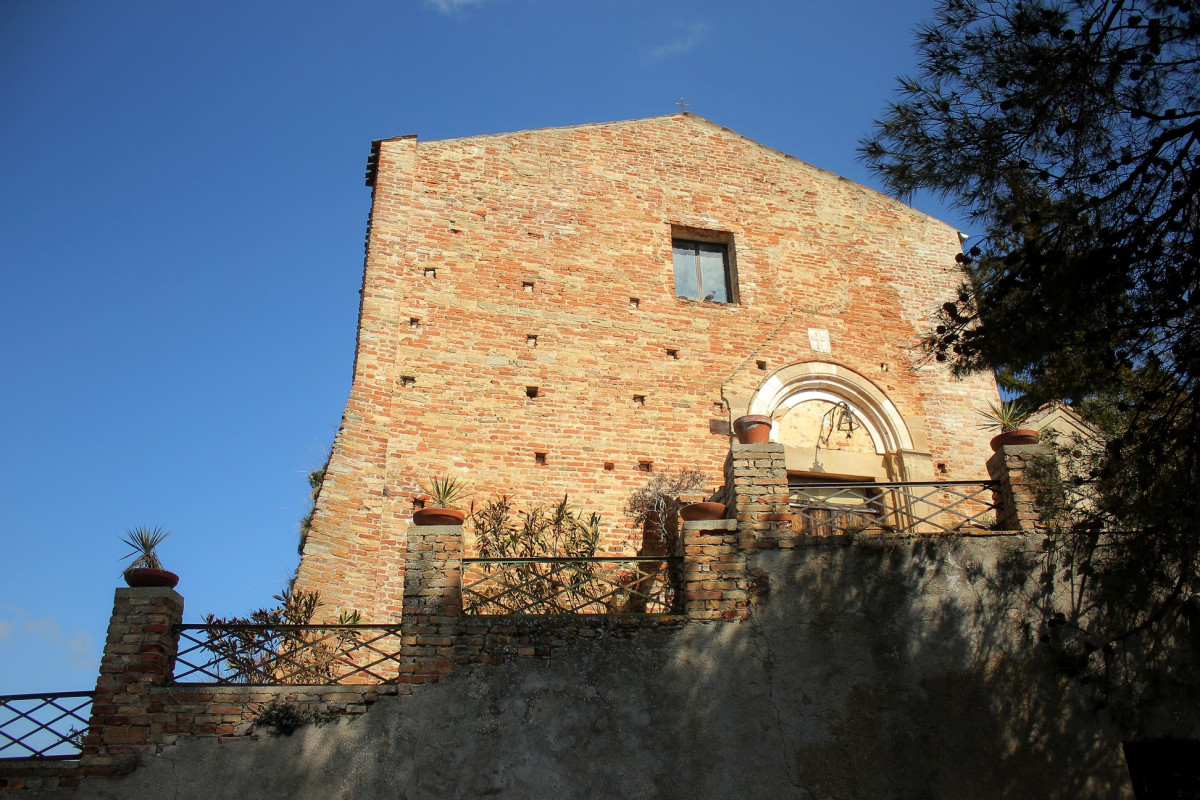
Former Parish Church of Saints Nicholas, Dionysius, Rusticus and Eleuterio
Climbing from the gate, you reach the highest hill in Ripatransone (508 m), which offers one of the most extensive views of the village. Here, one of the oldest churches in Ripatransone stands majestically, the Ex Pieve dei Santi Niccolò, Dionigi, Rustico ed Eleuterio. Its origins date back to the 9th century, as evidenced by the presence of the simple and solemn Romanesque apse, made with squared stone ashlars.
The current entrance portal dates back to the 15th century, when the building's exterior was renovated. During the 16th century, the church was renovated internally, acquiring late-Renaissance features while maintaining a single-hall plan, typical of medieval parish churches.
This sacred building played a central role in the religious life of the city's first castles, serving as a spiritual reference for the population scattered across the hills. Its panoramic and isolated location, not far from the Belvedere San Nicolò and the 15th-century walls, makes it one of the most significant testimonies of religious continuity between the Early Middle Ages and the 16th century.
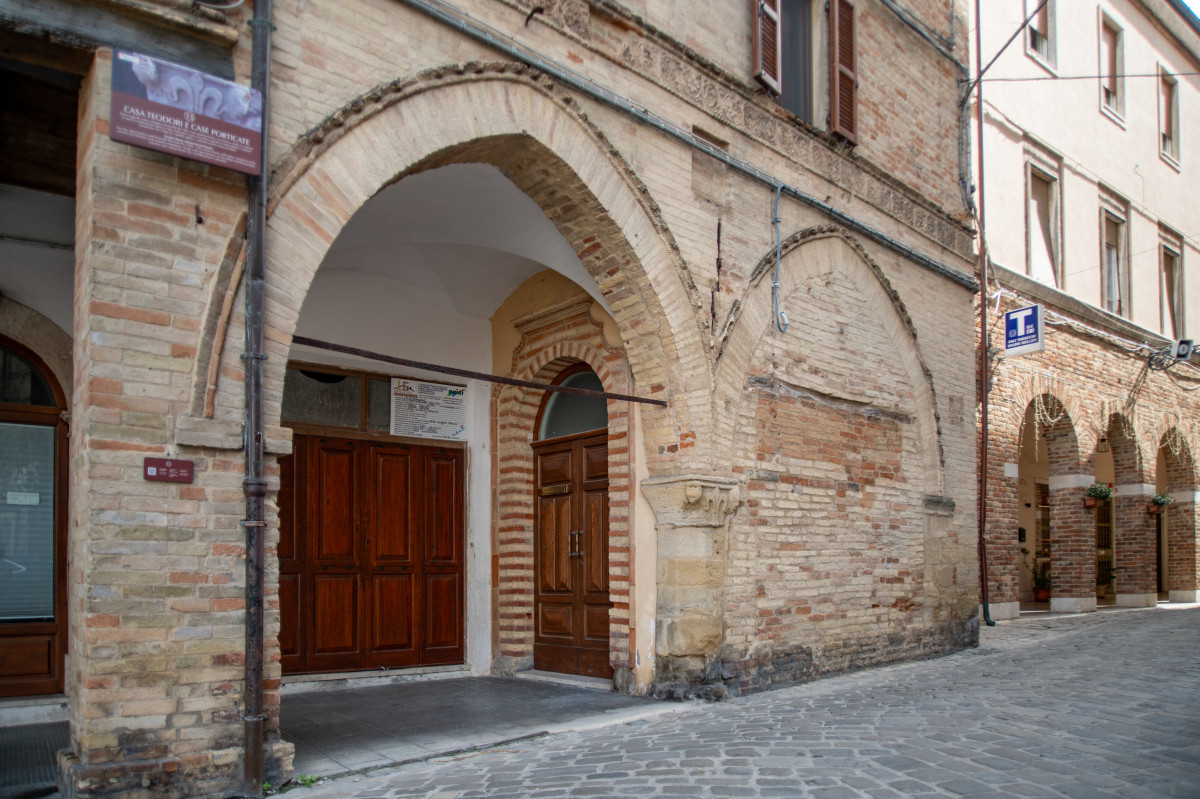
Casa Teodori and porticoed houses
Along Corso Vittorio Emanuele II, which runs through the historic center of Ripatransone, stands one of the city's most important civic architectural complexes: Casa Teodori. This 15th-century noble residence features a beautiful two-bay ogival portico, terracotta arches, and original decorative terracotta tiles.
.jpg)
Griffin Complex
Running parallel to Corso Vittorio Emanuele II is Via Garibaldi, home to a unique collection of late-medieval buildings that illustrate the evolution of civic life between the 13th and 15th centuries. Among these is the so-called "Grifoni Complex." Located at number 17 Via Giuseppe Garibaldi, the Grifoni Complex is a historic residence that preserves a rare decorated terracotta cladding dating back to the second half of the 15th century. Restored in 1979, the façade features ornamental motifs that demonstrate the craftsmanship of the era and the influence of the Gothic style.
Palazzo del Podestà – Luigi Mercantini Municipal Theater
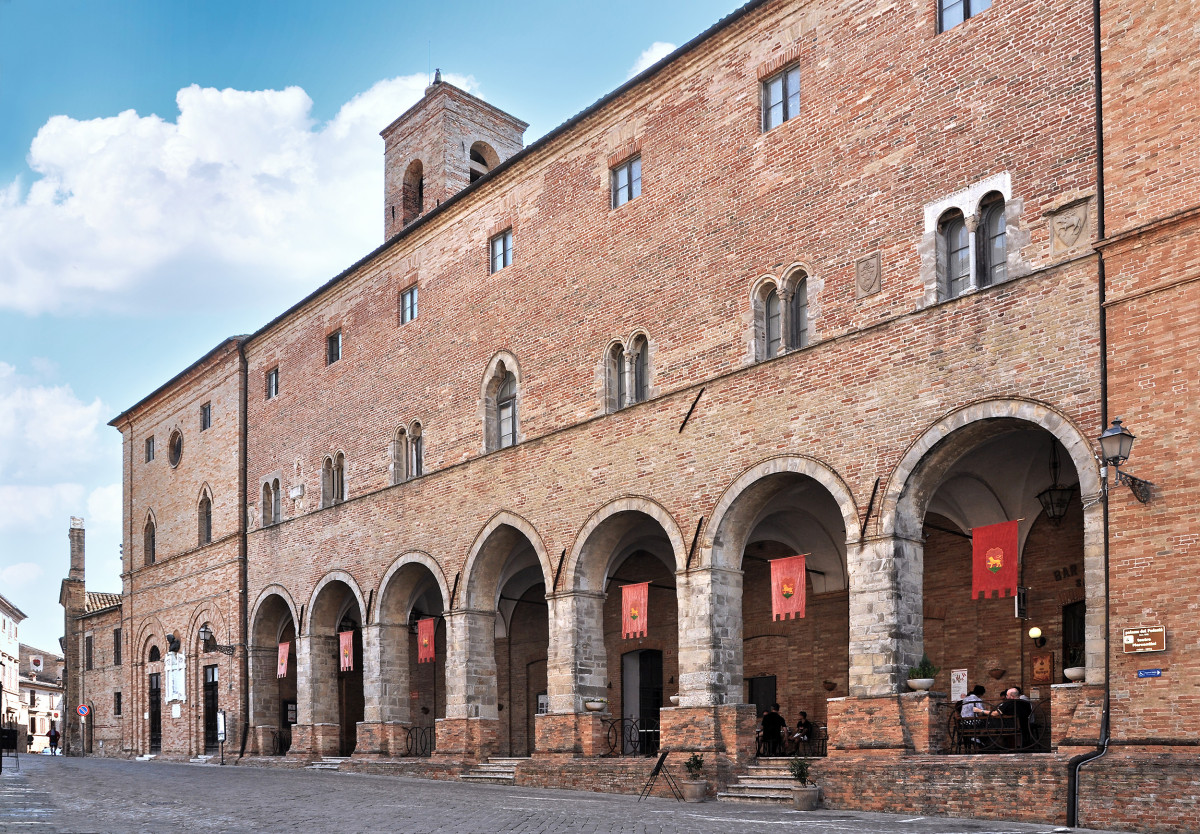
In Piazza XX Settembre, the beating heart of city life, stands the Palazzo del Podestà of Ripatransone, one of the most evocative medieval civil architectures in the Marche. Built in 1304 as the seat of the municipal government, it features the sober and elegant Romanesque-Gothic style: a large portico with seven arches (the central one is pointed) and an upper floor punctuated by mullioned windows and an elegant trefoil single-lancet window.
Next to it stands the Civic Tower, which houses the large bell in its belfry, cast in 1702 by Laureti di Spoltore, whose ringing still accompanies ceremonies and solemn celebrations of the community.
Since 1790, the rooms on the first floor have been transformed into a theater, today named after the Ripatransone patriotic poet Luigi Mercantini. With its U-shaped floor plan, intimate boxes, and elegant neoclassical decorations by Luigi Ruffini, the Teatro Comunale is a true architectural gem, a vibrant center of the city's culture and entertainment.
Church of San Pastore
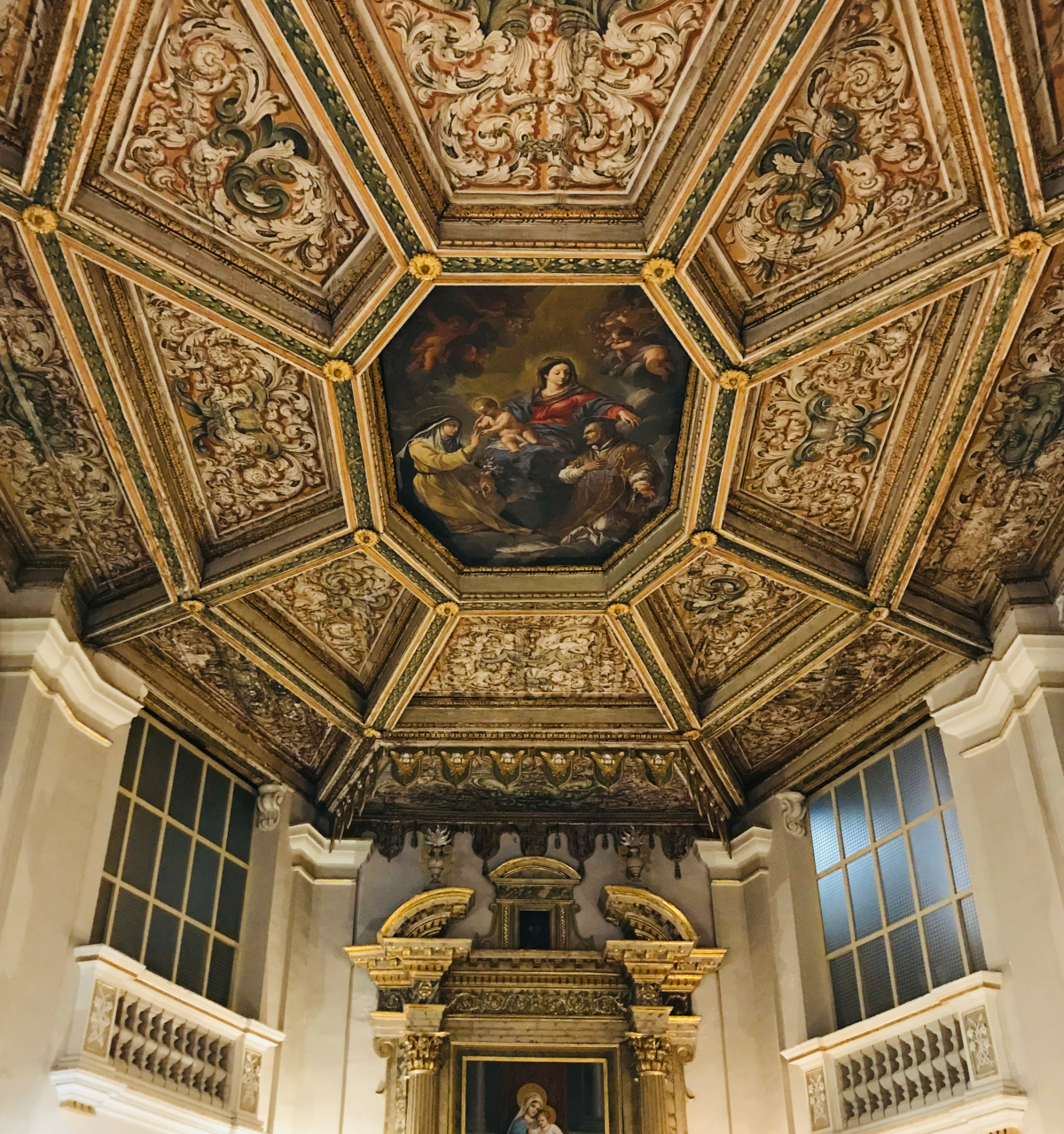
In the heart of Ripatransone lies the evocative Church of San Pastore, a building with medieval origins dating back to the 13th century. Its history bears witness to the transformations of time: in the 18th century, it was completely restored, taking on its current appearance with its refined painted coffered ceiling and characteristic semicircular portico, designed by architect Luzio Bonomi.
Inside, the visitor's gaze is captured by 14th-century frescoes that recount popular faith and a precious octagonal canvas depicting the Madonna and Child, Saint Catherine of Siena, and Saint Pastor, attributed to a painter of the Marattesque school between the 17th and 18th centuries.
The church is closely linked to the presence of the Institute of the Pie Convittrici della Carità, now the Teresian Sisters, who preserve its memory and keep its connection with the community alive. This sacred place, intimate and rich in art, represents a fundamental step for understanding the spiritual and cultural face of Ripatransone.
.jpg)
Gate of San Domenico (or of Roflano)
The Porta di San Domenico, also known as the Porta di Roflano, is one of the ancient gateways to the historic center of Ripatransone, located on the southeastern side of the city. Located near the ancient Dominican complex (no longer existing), the gate marked the boundary between the urban district and the agricultural and monastic areas outside the walls.
Built of brick and local stone, with a pointed arch and Renaissance masonry, the gate is an integral part of the city's defense system, which also includes the nearby Porta Cuprense and the Complesso delle Fonti. Beyond its defensive function, it also represented a symbolic and spiritual place, being linked to the presence of Dominican friars and pilgrimages.
Today, the Porta di San Domenico is one of the most evocative entrances to the Medieval Court – Teatro delle Fonti, and is still used by those who wish to discover the authentic and multifaceted face of the city. Crossing it symbolically represents the entrance into a suspended time, between urban civilization and ancient landscape.
.jpg)
Medieval Court - Theatre of the Sources
The Fonti Complex, located in the heart of the Roflano district, represents one of the most emblematic testimonies of medieval Ripatransone. Built between the 15th and 16th centuries, it was an integral part of the city's water and defense system: it provided water supplies and served as a meeting point and rest stop for pilgrims, travelers, and residents of the surrounding castles.
The structure is divided into a walled courtyard, flanked by two important city gates: the Porta di San Domenico (or Roflano) and the Porta Cuprense, which still mark the southeastern borders of the historic center.
In recent decades, this space has been enhanced as an open-air theater, becoming the Teatro delle Fonti: a place where history and contemporary culture meet, hosting shows, concerts, and cultural initiatives.
.jpg)
Cuprense Gate
The Roflano neighborhood, now also known as San Domenico, extends between the western walls and the Fonti area. It was accessed through Porta Cuprense, still visible, not far from the evocative Fonti Complex. The neighborhood's religious center was the Church of the Madonna della Misericordia (known as del Carmine), once the center of processions and popular devotions.
.jpg)
Porta d'Agello known as Porta di Donna Bianca de' Tharolis
The Agello neighborhood, in the southeastern part of the historic center, takes its name from the eponymous gate, now known as Porta d'Agello or Porta di Donna Bianca, linked to a well-known local legend. It is the neighborhood closest to the final stretch of the Corso and is recognized by the Church of Santa Maria Annunziata d'Agello, now deconsecrated but still visible in its late medieval layout. Agello was an independent castle and long maintained its own identity.