
Ripatransone preserves an extraordinary heritage of churches, convents, chapels, and votive sites that narrate centuries of popular faith, sacred art, and ecclesiastical history. In this village perched between the sea and the mountains, spirituality and beauty blend in the urban and rural landscape, creating a network of "sacred paths" that guide the visitor through intimate silences and artistic wonders.
From the majestic architecture of the Cathedral and the great city sanctuaries, to the small country churches, custodians of ancient frescoes and devotions passed down through time, each stop reveals a different facet of the relationship between man, land, and the divine.
This itinerary is designed for those who wish to discover the profound spiritual soul of Ripatransone, walking streets paved with art, memory, and contemplation. Through the churches within the walls and the sacred places scattered across the surrounding hills, one traverses a geography of the sacred that speaks the language of stone, incense, and light.
Itinerary stops
.jpg)
Cathedral Co-Cathedral of St. Gregory the Great - Diocesan Shrine of Our Lady of St. John
In the heart of the historic center, in Piazza Ascanio Condivi, stands the Co-Cathedral of San Gregorio Magno, built between 1597 and 1623 to a design by Giovanni Guerra. The 19th-century façade and the bell tower, surmounted by a copper statue of the Redeemer, define the monumental profile of the building.
Inside, the church houses masterpieces of sacred art: the wooden pulpit by Desiderio Bonfini, the organ by Gaetano Callido (1783), and works by Orazio Gentileschi, Giovanni Lanfranco, and Alessandro Turchi, known as Orbetto. The apse houses the wooden choir by Agostilio Evangelisti (1620) and a statue of the titular saint. Also noteworthy is the wooden crucifix, donated – according to tradition – by Pope Pius V in 1571.
The Cathedral represents the spiritual and artistic heart of the city. Adjacent to the Cathedral, you enter the Sanctuary of the Madonna di San Giovanni, a place deeply rooted in Ripa's popular devotion. Built between 1846 and 1858 to a design by architect Giambattista Carducci, it houses the venerated statue of the Madonna, crowned patron saint of the city since 1893.
The elegant and intimate interior houses four statues by Luigi Fontana, five fine Murano chandeliers, and a two-tiered wooden choir stall created by Sante Morelli di Montegiorgio. The aedicule enclosing the statue of the Virgin is a neoclassical work designed in 1881 by Francesco Vespignani. A sculpted copper portal by Cleto Capponi (1950) underscores its sacred importance. This place, an unmissable stop for the faithful and visitors, unites art, faith, and collective memory.
.jpg)
Church - Oratory of San Giovanni Decollato (called Oratory of Death)
Located in the crypt of the Cathedral, the oratory has been home to the Confraternity of Mercy and Death since the 16th century. Transformed in the 20th century into the Tomb of the Bishops of Ripatransone, it houses works of great importance: the polychrome Crucifixion by Giuseppe Marinucci, a 17th-century wooden Crucifix, the altar of the Virgin of Sorrows attributed to Giovanni Moschetti and enriched by the Dead Christ by Giuseppe Manzo di Lecce.
The walls feature the Stations of the Cross from 1974, 19th-century gilded appliques, and a canvas by Luigi Corsi. The sacristy houses engravings by Giuseppe Capparoni and a painting by Pietro Capocasa. The collection is completed by the 1909 Verati organ and a canvas by Mario Vespasiani dedicated to the procession of the Dead Christ, a sign of the continuity between devotion and the city's memory.
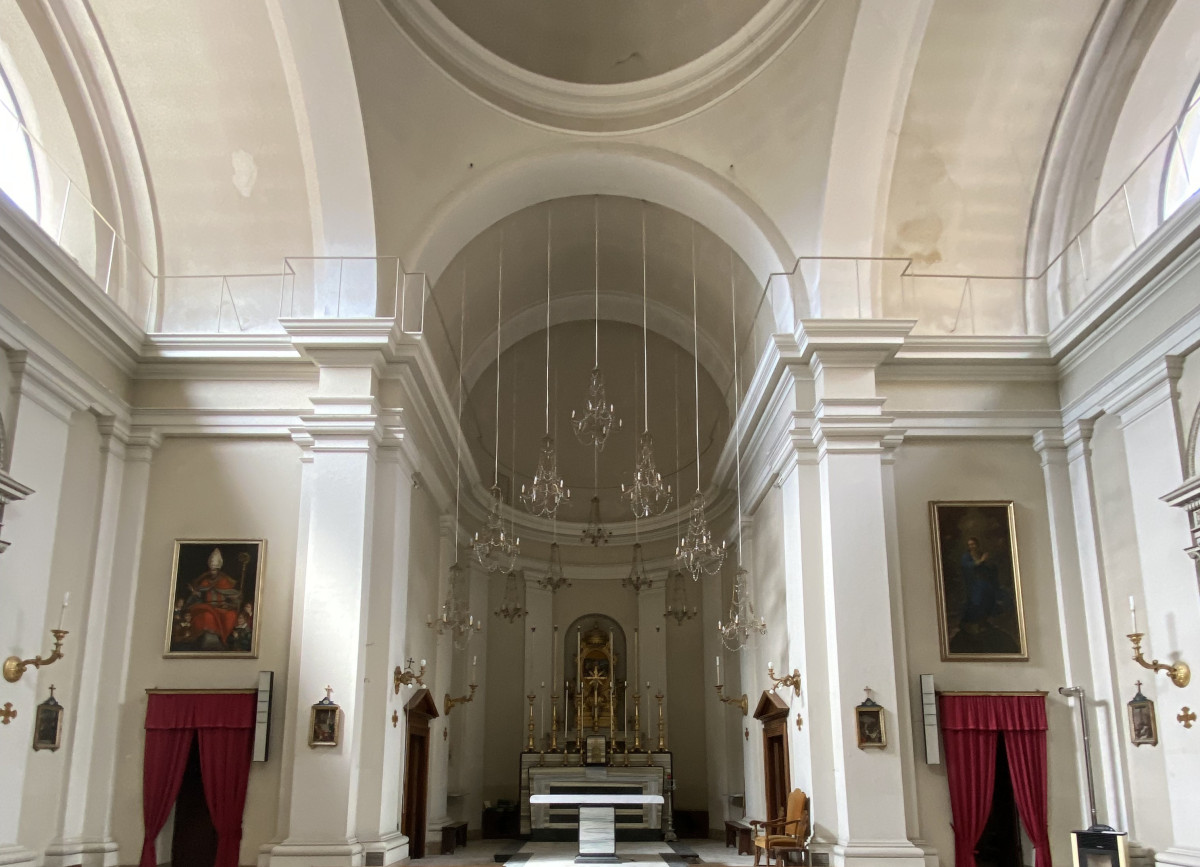
Church of Santa Maria della Valle
Walking through Monte Antico, you'll come across the Church of Santa Maria della Valle, a treasure trove of history and spirituality. Its origins are intertwined with the life of the neighborhood, and thanks to 19th- and 20th-century restorations, the building today displays an elegant Neoclassical-Art Nouveau appearance. The bell tower, completed in 1921, stands next to the apse like a stone sentinel and symbol of the community.
Inside, visitors will find works that recount faith throughout the centuries: the 16th-century panel of Santa Maria delle Grazie, the 18th-century canvas of Saint Nicholas of Bari, and the evocative Chapel of Our Lady of Lourdes, built in 1905. A place of prayer and tradition, the church has always been linked to the Confraternity of the Most Holy Sacrament of the Gonfalone, which preserves its soul and memories.
.jpeg)
Church of the Immaculate Conception known as San Filippo Neri
Built between 1680 and 1722, the church was initially officiated by the Fathers of the Congregation of the Oratory of San Filippo Neri. The design bears the signature of Francesco Massari, a student of Borromini, and Luzio Bonomi, an architect-painter originally from Ripatransone, who combined Baroque architectural rigor with a language rich in momentum and harmony.
The Latin cross plan has a single nave, embellished with gold and stucco decorations created by Milanese artist Mastro Tobia and Perugian Lorenzo Vibi. The solemn and elegant interior houses a 17th-century canvas of the Immaculate Conception by Pietro da Cortona, along with precious relics and mementos of San Filippo Neri, which testify to the centuries-old devotion associated with this church.
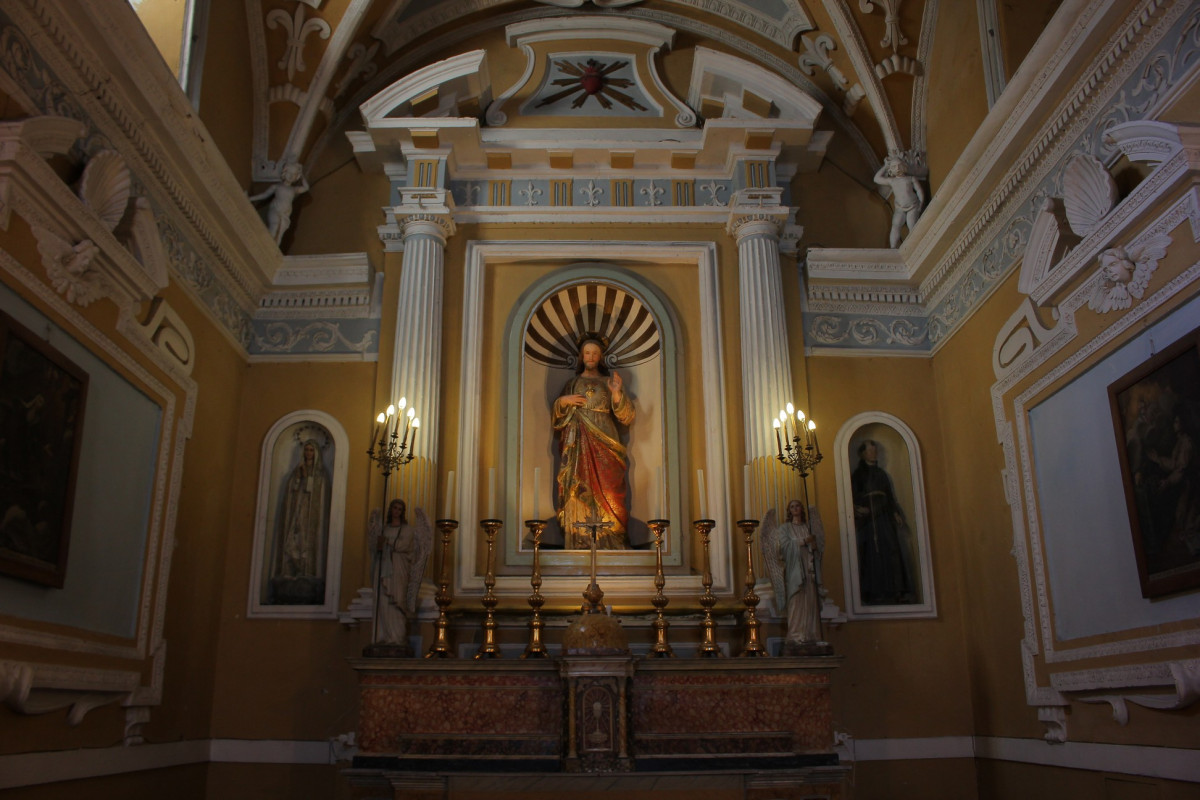
Church of San Rocco
Built in the 16th century at the behest of the community, the church was built as a collective vow after the terrible plague and locust invasion that struck Ripatransone in 1526. Recalling its civic origins, the municipal coat of arms, sculpted in 1569 by Giacomo da Varese, stands out on the tympanum.
The simple, single-nave interior was embellished in the 17th century with elegant stucco friezes, which lend rhythm and solemnity to the sacred space. Over the centuries, the church has been a custodian of popular devotion, becoming the home of the Confraternity of the Sacred Heart of Jesus, known as the Sacconi, which here has passed down religious practices and traditions linked to the city's spirituality.
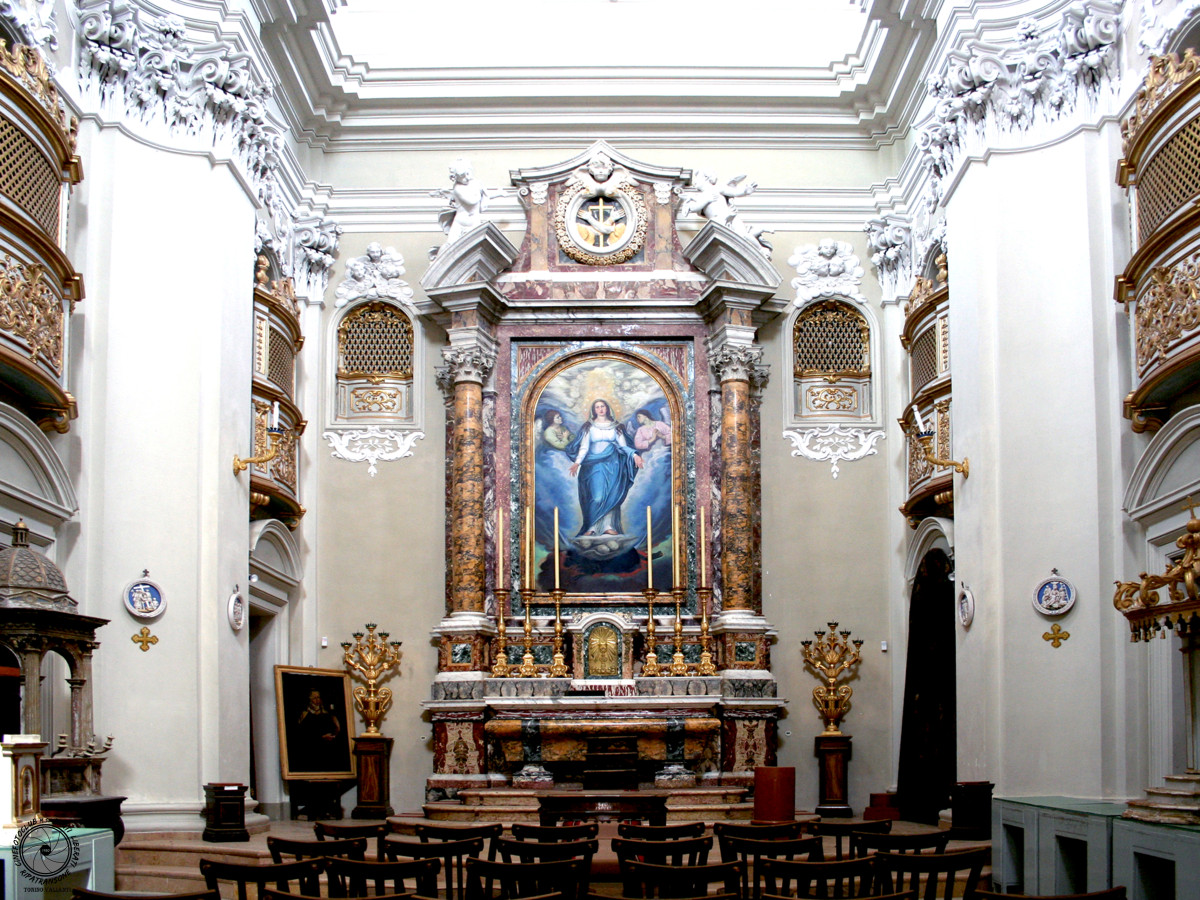
Church of Santa Chiara - Former Episcopal Seminary
Continuing along Corso Vittorio Emanuele, you come across the Church of Santa Chiara, built by the Poor Clares between 1750 and 1753 and consecrated in 1754. The slender façade leads to a single-nave interior, embellished with Corinthian capitals, refined stucco, and nine gilded grilles. The high altar, covered in polychrome marble tiles, is considered one of the finest in the city. Here you can admire works by Michelangelo Bedini, Franciscan sculptures, and a majolica Via Crucis in the style of the Della Robbia order. Located within the Episcopal Seminary complex, designed by Giuseppe Rossetti, it today represents a perfect blend of spirituality and artistic heritage.
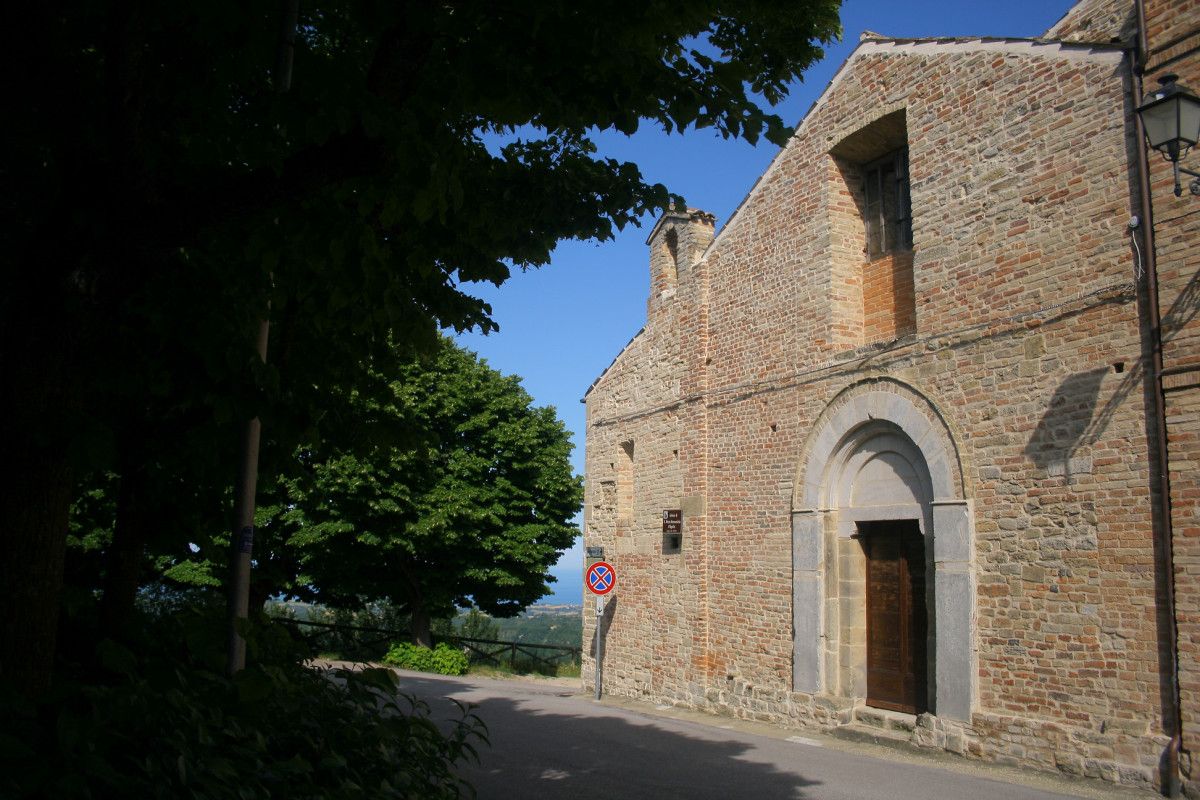
Former Church of Santa Maria Annunziata d'Agello
Located at the end of Corso Vittorio Emanuele, the Church of Santa Maria Annunziata d'Agello is one of the oldest and quietest religious testimonies of Ripatransone. Dating back to the 15th century, it is striking for its asymmetrical façade and its simple yet refined carved sandstone portal. Once with two naves, it was likely reduced to a single nave in the 18th century. Deconsecrated about a century ago, it is now used as a warehouse, but remains an important piece in the village's urban and spiritual mosaic.
Church of San Pastore
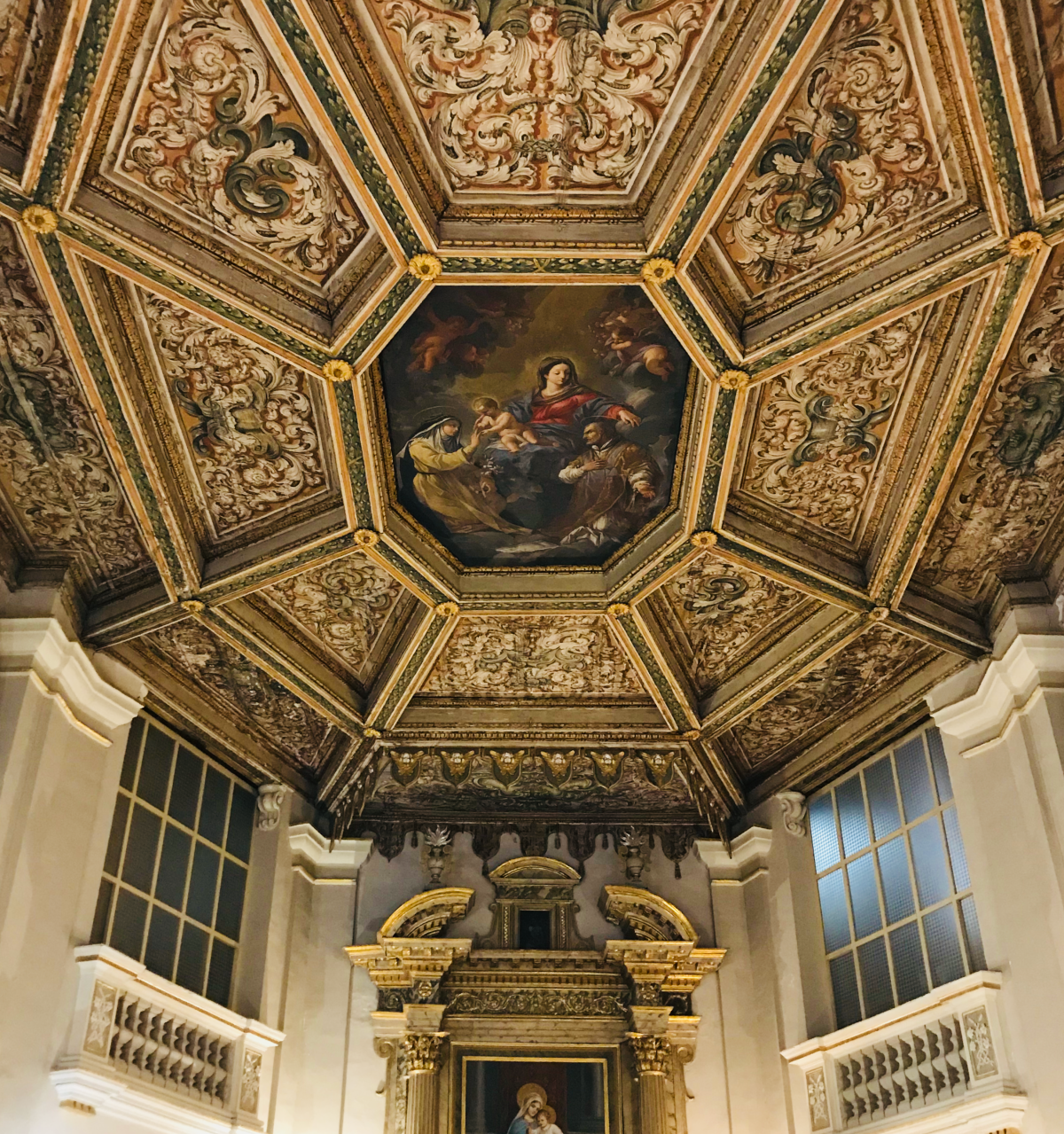
A building with medieval roots that preserves centuries of history and devotion, the Church of San Pastore, built in the 13th century, was completely restored in the 18th century, when it was given the appearance we admire today: the elegant and harmonious painted coffered ceiling and the semicircular portico, designed by architect Luzio Bonomi, which leads elegantly to the nave.
Inside, one can sense the stratifications of time. Fourteenth-century frescoes remain, harking back to the spiritual fervor of the Middle Ages, while an octagonal canvas from the late 17th century, attributed to an unknown painter from the Maratte area, depicts the Madonna and Child, Saint Catherine of Siena, and Saint Pastor, in a blend of faith and art.
Next to the church is the Institute of the Pie Convittrici della Carità, also known as the Teresian Sisters, which still bears witness to the profound bond between the sacred place and the religious community.
Church of San Michele Arcangelo known as Sant'Angelo
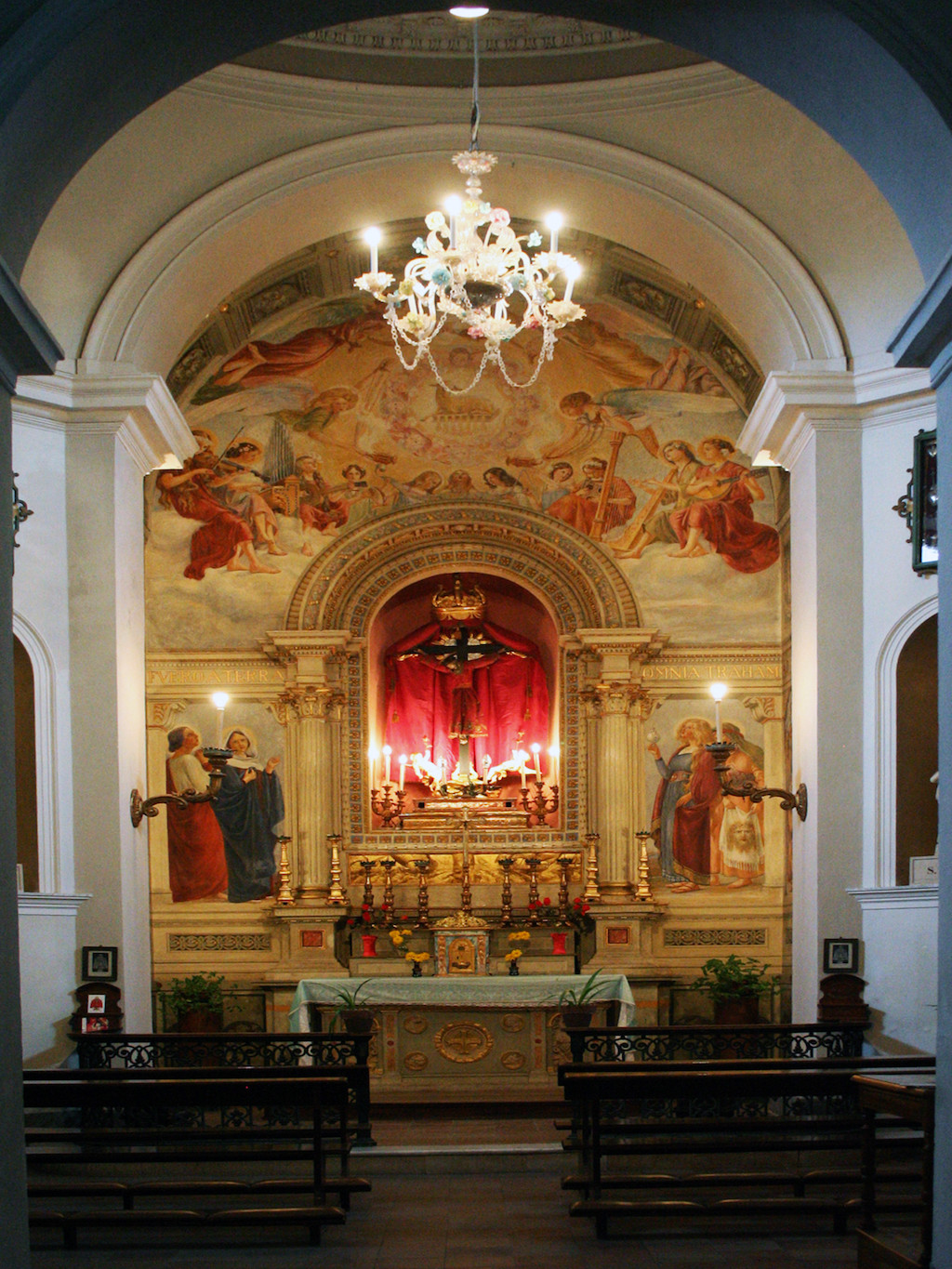
In the Roflano district stands the Church of San Michele Arcangelo, one of Ripatransone's oldest buildings, dating back to the 13th-14th centuries. Of the medieval building, only the façade and the Romanesque-Gothic portal remain, now embellished with a bas-relief depicting the Crucified Christ, created by the futurist Cleto Capponi. Next to it is the side portal, dating to 1552, commissioned by Don Antonio Spina, who also erected the imposing bell tower in 1598.
The interior, renovated in the late 18th century by the architect Giuseppe Rossetti, has a single nave, with a small dome leading to the semicircular apse. A place of particular devotion is the Chapel of the Holy Crucifix, where an ancient 17th-century wooden statue by an unknown artist is venerated.
The church is also home to the Confraternity of the Blessed Sacrament of St. Michael the Archangel, which preserves its liturgical life and traditions, keeping alive the bond between art, faith, and community.