
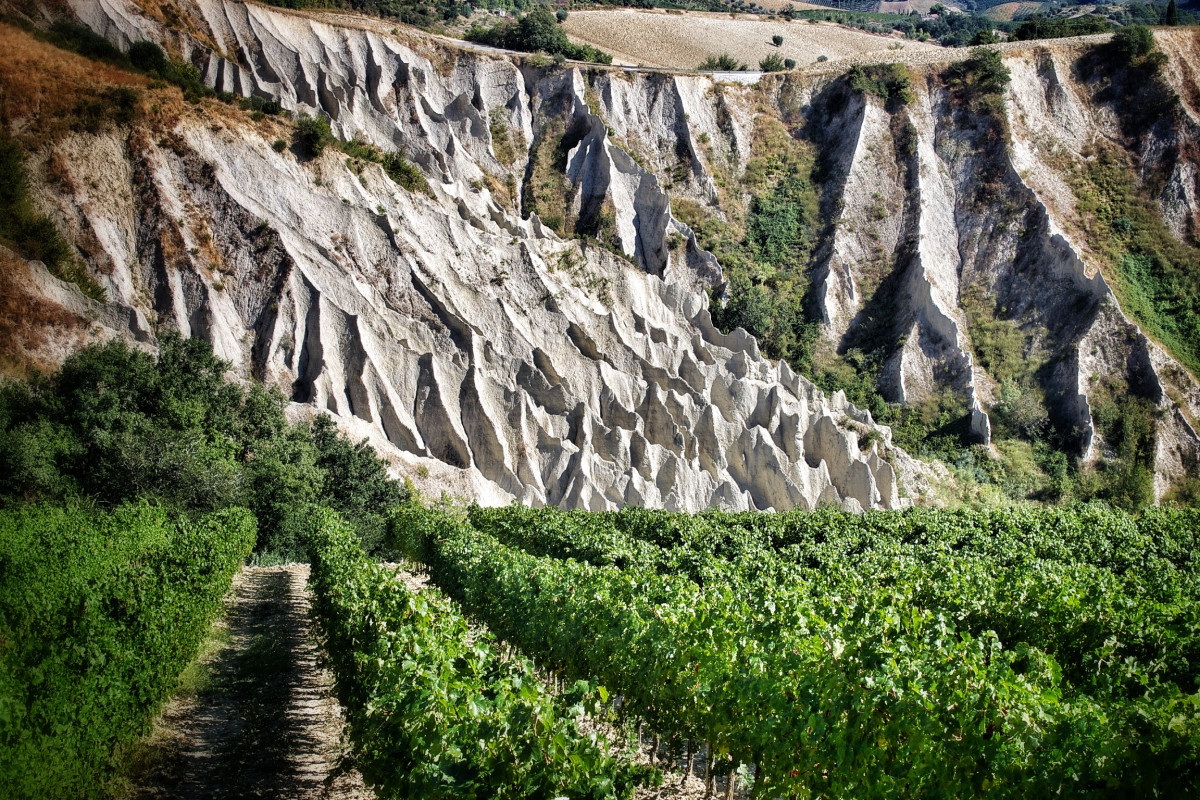
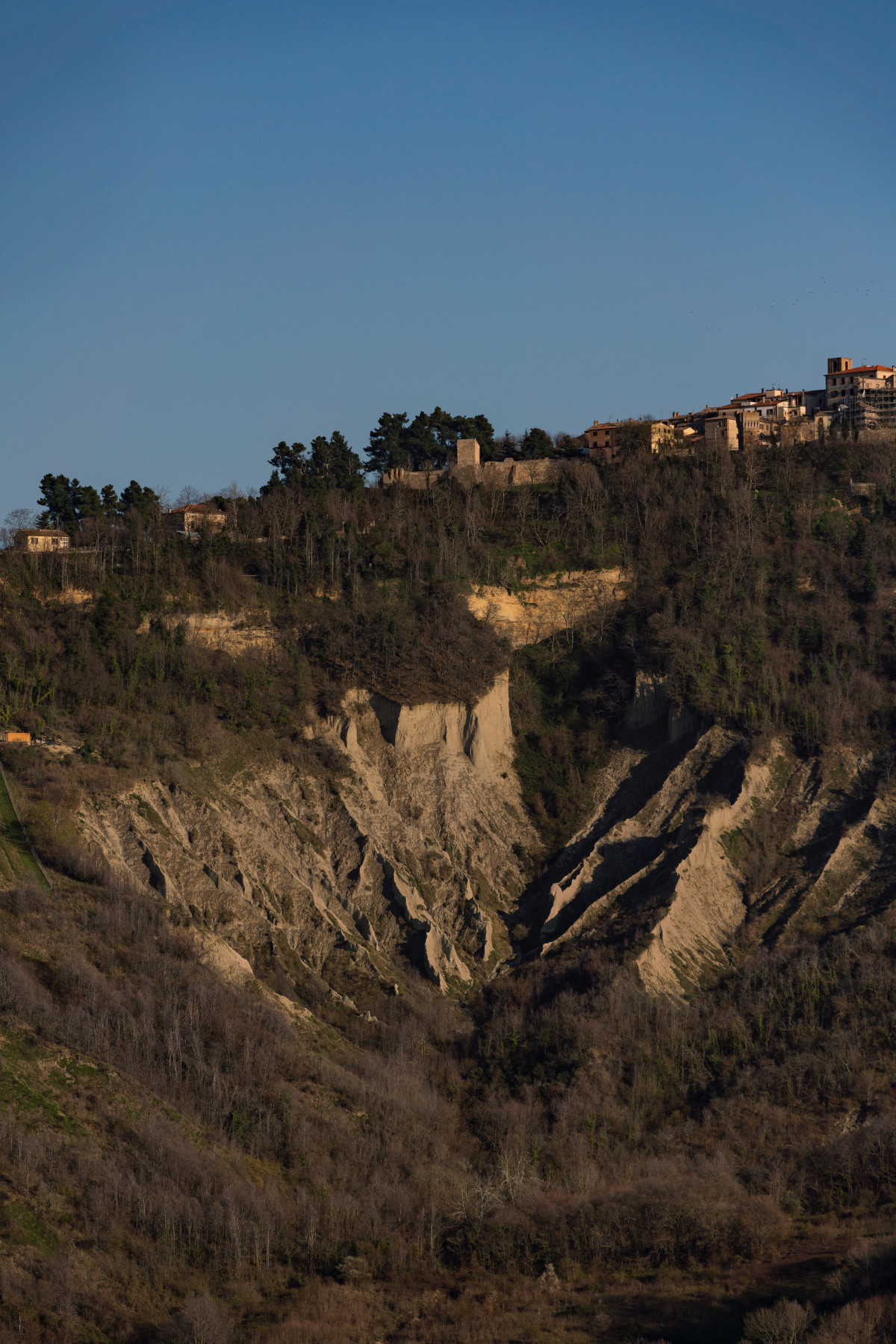
The Ripani badlands are a spectacular geomorphological phenomenon characteristic of the Piceno landscape. They form due to the erosion of clayey soils, which are sparsely populated and easily attacked by rainwater. The alternation of dry summers and heavy rainfall, the steepness of the slopes, and the presence of more resistant layers at the summits favor the rapid development of deep, parallel grooves, creating ever-evolving ridges and valleys. Their origins likely date back to the Holocene, when the deforestation of ancient evergreen oak forests exposed the clay layers to the action of climate and water. Runoff, landslides, and mudslides have progressively shaped the slopes, generating the typical "knife-edge grooves" that characterize the gullies. These landscapes, widespread along the entire Apennine ridge, are distinguished from the biancane, dome-shaped reliefs marked by salt fissures. The Ripani gullies, with their spectacular, rugged, almost lunar appearance, are today not only a fascinating natural feature, but also a living testimony to the relationship between humanity, the environment, and the geological history of the area.